As previously noted, I am inclined to follow one of my former professors in his definition of history. He understood our field as the best possible interpretation of the past based on the best available sources and methods. On a more practical level, it is the unending effort to depict, as far as can be done, our historical subjects in their fullest complexity.
There are many ways of accomplishing this, the most straightforward being to draw from heretofore unknown or underutilized sources. Often, it is just as profitable to change our angle of approach.
In the field of Franco-American history, this might mean undertaking comparative work, that is, juxtaposing the experiences of French Canadians and other immigrant groups—maybe English Canadians. It might also mean exploring little-studied aspects of their lives, from their political involvement to their constructed racial world. We can also broaden the group of people we deem to be our historical subjects. There are temporal and geographical dimensions to this. If we decide to study the earliest waves of French-Canadian migrants, then we must turn our attention to such places as Sheldon, Vermont, and Keeseville, New York.
That brings us to the Franco-Americans too often left on the conceptual and geographical margins of our field: rural Franco-Americans. Despite many invitations to do so (in 1982, in 1991, in 2000, and in 2021), we are still left with little research on the economic and cultural life of Franco-Americans living outside of cities. Their story lives, with less visibility, in local histories, oral interviews, and often-cryptic newspaper stories involving back-page Americans.
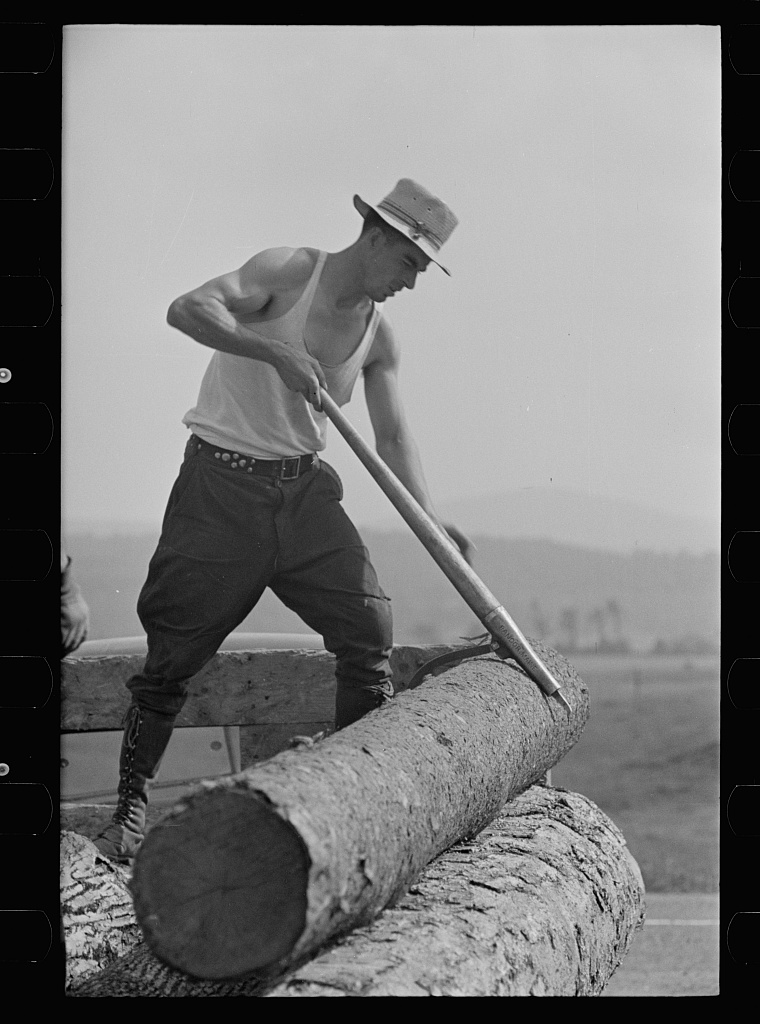
By no means is this a problem for Franco-American history only. Any cursory look at U.S. history textbooks reveals the neglect of rural areas—as though history only happens in cities. Typical post-Civil War survey books for high school and college students offer few rural excursions: African-American sharecropping, the late nineteenth-century populist movement, the interwar Dust Bowl, and more recent farmworkers advocacy. Immigrant groups are identified by their urban hubs. One textbook features a subsection titled “The Rise of an Urban Order” that is closely linked to global migration patterns between the 1860s and the First World War. The authors mention that some immigrants settled outside of cities, but this is a token acknowledgment. The problem of the rural Franco-American likely exists in the same measure in the fields of Irish-American and Italian-American studies.[1]
At the same time, there is no need to reinvent the wheel. A number of historians have studied ethnic life in the Midwest. Some have argued that rural life could prove emancipatory for immigrants. There is also a rich field of rural studies—with scholars typically trained as geographers and sociologists—to look to.
Rural sociologists have been especially attentive to socioeconomic disparities between urban and rural spaces. Limited infrastructure, access to services, and employment opportunities have exacerbated the poverty and lack of representation of historically marginalized groups. These scholars have created frameworks for understanding the relationship between identity and place.
Between history and rural studies, we have a body of knowledge on minority experiences that can inform our study of rural Franco-Americans. Those fields invite special attention to the relationship between economic independence (especially through property ownership) and cultural survival.
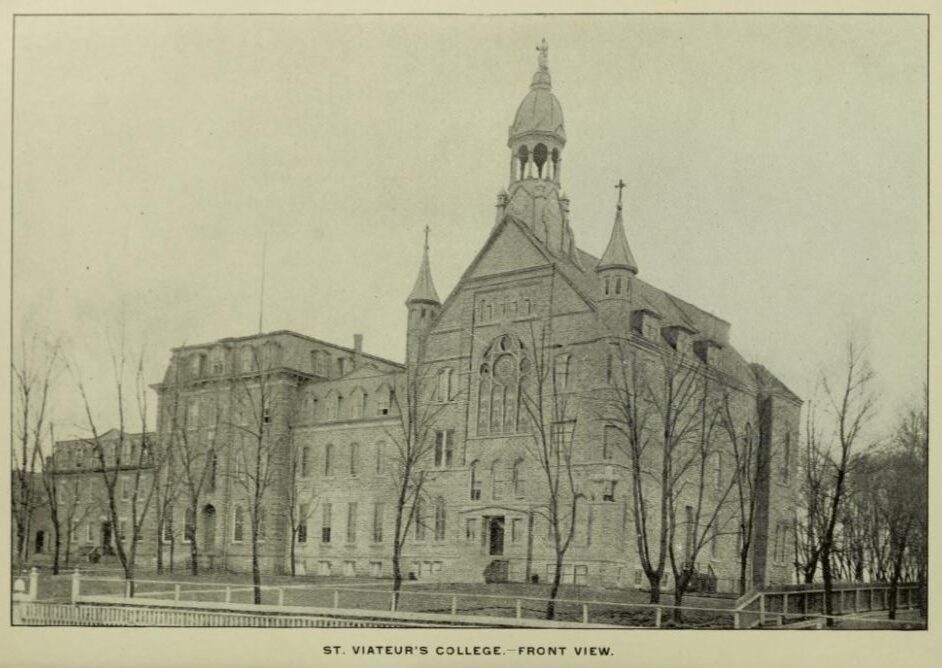
It is conventional knowledge that as Franco-Americans moved up economically, in the twentieth century, they moved out geographically. Ethnic neighborhoods fractured, leading to the erosion of national parishes. Already, middle-class “Francos” had begun to favor public high schools and join social groups that were not exclusively ethnic or Catholic. The demands of wartime and the opportunities of the G.I. Bill accelerated the process.
The history of rural Franco-Americans complicates this narrative. In Vermont, where the migration began in the first third of the nineteenth century, property acquisition was slow. French Canadians were highly mobile. They might continue to work in the agricultural activities that they had known north of the border, but their new economic, social, and legal setting was foreign. Property acquisition was slow. In few places were the migrants as numerous or clustered as their compatriots in, say, Massachusetts. In Illinois, the French Canadians who arrived in the 1840s and 1850s quickly purchased land. They settled without the intention of returning to Lower Canada. They formed largely homogenous communities from L’Erable to Manteno. The recent forced removal of Indigenous peoples had created a clean slate where the Canadians could form their own institutions rather than adapting to Yankee customs and institutions.
French-Canadian realities in Vermont and Illinois—quite simplified here—suggest that we cannot reduce rural Franco life to a single experience. Further research into specific regions is necessary. On the other hand, at this early stage, evidence from the Northeast and the Midwest does help draw attention to the connection between economic autonomy and cultural survival, which could mean something quite different in Sheldon than it did in Fall River.
This framework is a new angle—and perhaps it will lead to a less myopic understanding of our historical subjects.
My article on the subject, “Rediscovering Rural Franco-Americans: Analytical Perspectives,” will appear in the next issue of Québec Studies.
[1] The challenge is amplified by the absence of an agreed-upon definition of rurality. Even the U.S. Census Bureau defines rural spaces by what they are not. These spaces exist in a continuum that stretches to large cities and, just as much as urban centers, they are expressions of modern capitalism.
Pingback: This week's crème de la crème - March 28, 2026 - Genealogy à la carteGenealogy à la carte