The age of the Atlantic Revolutions began in Lexington in 1775 and ended in Odelltown sixty-odd years later. Through that time, societies on both sides of the ocean wrestled with a question of daunting proportions and implications: What type of insurrection ought to be allowed or considered legitimate? This was a pressing concern for Americans in the wake of their successful struggle for independence. Shays’ Rebellion and the Whiskey Rebellion raised sharp questions about the popular will. In the 1790s, the subjects and citizens of North America were faced with the ripples of the French Revolution. Britain was at war with the French Republic from 1793. By extension, so were its Canadian subjects. In turn, under John Adams, the United States were engaged in an undeclared conflict with France.
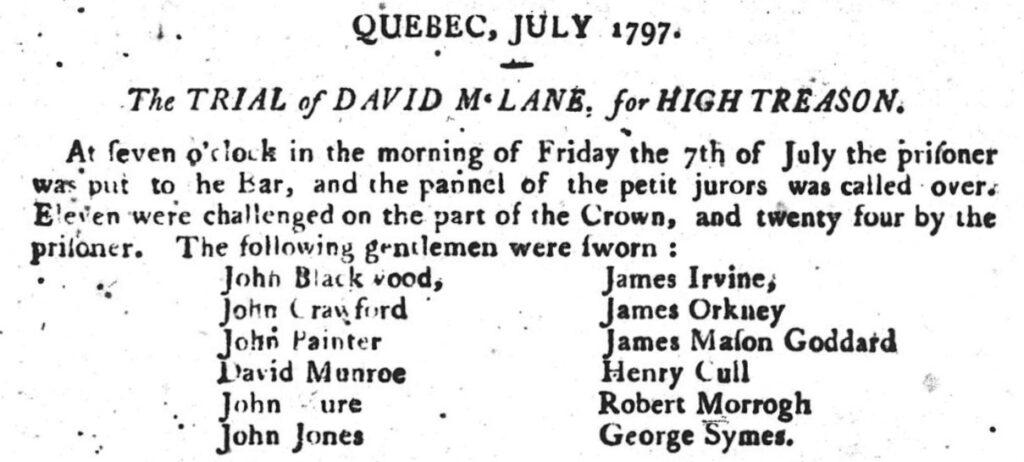
This is all to say that as French ships engaged with American and British vessels on the high seas, the French Revolution was not as foreign to the peoples of North America as we might at first think. The frenzy of fear prompted the adoption of the Alien and Sedition Acts by Congress in 1798. By that point, Canada had already had it brush with foreign agitation—at least according to its colonial government. In July 1797, David McLane had been brought to trial for seeking to excite a rebellion and assisting an enemy nation (France) in a projected invasion.
McLane is often relegated to a footnote in the history of Quebec partly because very little is known of him and partly because he seems, in retrospect, to have been a nobody with absurdly grandiose designs—un crinqué. A resident of the United States, he failed in business in Rhode Island and went to Canada. In the winter of 1796-1797, aged about 30, he began propagating his revolutionary plan, supposedly with the support of the French Republic, in the Lake Champlain region and then in Lower Canada. He chose his confidants poorly. One of these was François Chandonnet.
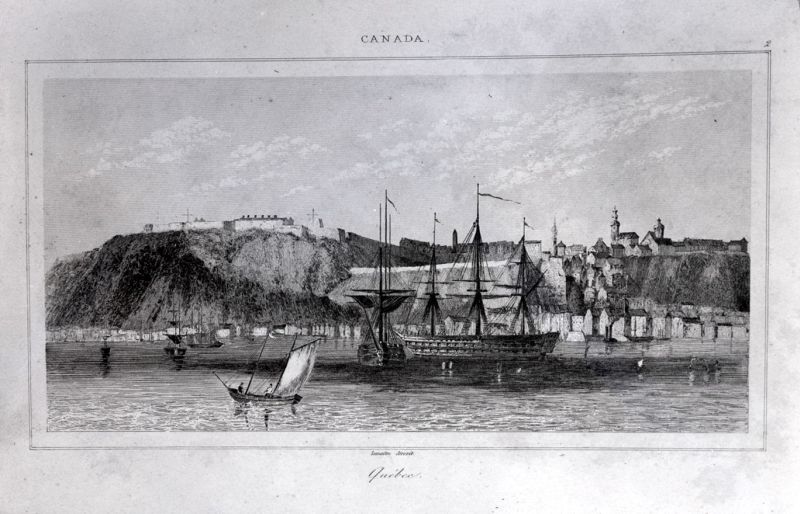
Only slightly more is known of Chandonnet. He was born to French soldier André Chandonnet (or Chandonné) and his wife Charlotte Fréchette in 1752. During the Continental invasion of Quebec in 1775-1776, he joined the insurgents. He seems to have served as a quartermaster and risen to the rank of lieutenant. After the war, a small colony of French Canadians, many being veterans, emerged on the western shore of Lake Champlain. Chandonnet was not among the first wave of settlers. The census of 1790 places him in Poughkeepsie, New York. But north he went. He succeeded John Douglas as innkeeper in Chazy, where he made a reputation as a rough man. According to one antiquarian work, “[h]e taught his children to swear like pirates till they were eight years old, and then told them they had arrived to the years of understanding and must stop the use of profane language, or he would use the whip, which he did freely, as the old inhabitants remember.” Chandonnet was a person worth knowing—and most likely a person not to be antagonized.
According to his testimony, Chandonnet first crossed paths with McLane in July or August 1796. They then met “near the Province line” (likely at Chadonnet’s inn in Chazy) at the beginning of the winter. McLane sought to extract a promise of secrecy from his counterpart, who refused. McLane went ahead anyway and explained that he was an agent of the French Republic who was sent to gauge popular feeling in Lower Canada and possibly induce the habitants “to join a revolution.”
It seems that Chandonnet was perfectly placed to assist in this scheme, since he had plans to settle on the St. Regis River, west of Montreal, and might help smuggle shipments of arms on lumber rafts both on the St. Regis and on Lake Champlain. (At the same time, McLane seemed to confuse the St. Regis River with the Châteauguay.) Chandonnet was a natural person to turn to both for his local influence and his service in the cause of American independence. Was France not fighting the same cause? Well, even if Chandonnet thought so, his own revolutionary days were behind him. He refused to pledge his support. McLane, for his part, had similar conversations with other people of middling status on both sides of the border. In the spring, his machinations finally reached the ear of colonial officials. A Charles Fréchette, who had first met McLane at Saint-Jean-sur-Richelieu, introduced him to John Black, a member of the provincial legislature. Black sent for a magistrate and McLane was arrested.
The attorney general opened the ensuing trial by reminding the jury of the chaos and violence of the French Revolution, the consequences of which were “indelibly recorded for the horror and execration of posterity in the blood of their lawful Sovereign, in the blood of their nobility, in the blood of their clergy, in the blood of thousands of the best and most innocent of their citizens.” The trial itself was a brief affair. Six witnesses testified. Chandonnet, an American citizen, was likely under no compulsion to do so, but if he were involved in trade across the border, he may have spied some tangible benefits in the trial. He told of McLane’s attempts to foster an uprising.
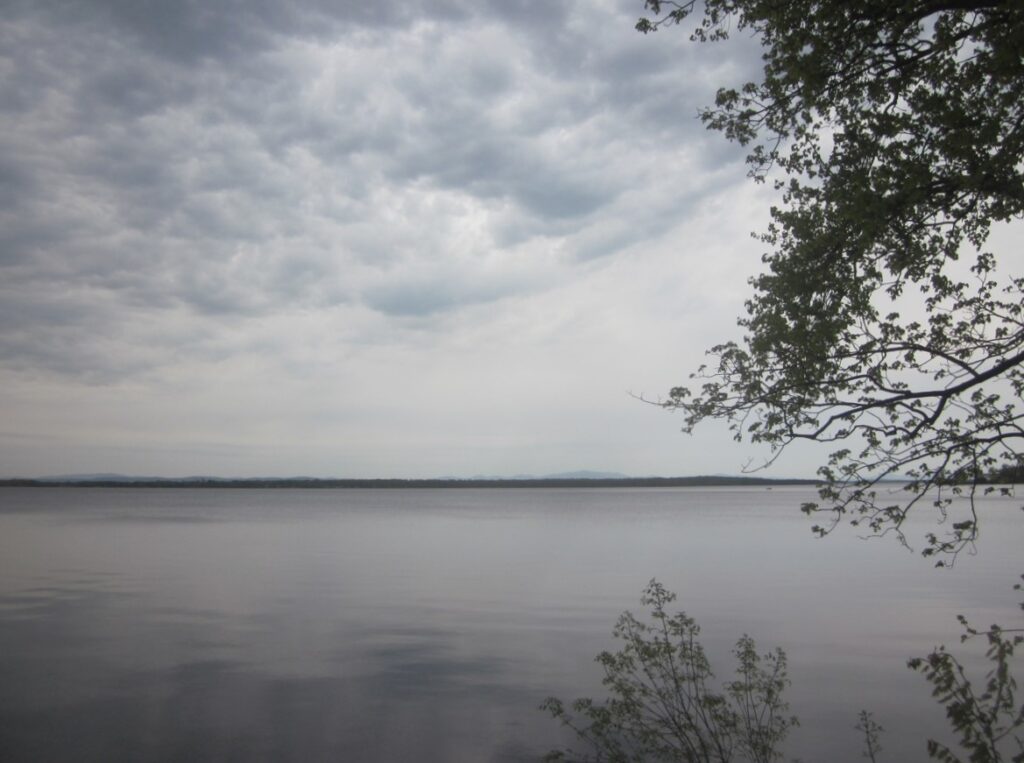
McLane defended himself. He had made inquiries about public sentiment in Lower Canada, but not with a view to foment insurrection, he said. Largely he was seeking to avoid his American creditors and make a new start in business. He had a wife and his in-laws had property in France, but the naval war had foiled his efforts to secure it. The witnesses had all misread his intentions. His court-appointed attorneys also spoke, and again so did the attorney general. The jury withdrew and almost instantly found against the prisoner. Death was his fate.
Among the spectators of McLane’s execution was Philippe Aubert de Gaspé, who later described it in the notes to his novel, Les Anciens Canadiens. He recalled the prisoner as a tall, attractive man who went to the gallows with quiet assurance. What followed was a shocking scene to the ten-year-old schoolboy. After the hanging, the executioner removed the heart and other organs, which were roasted before the spectators, and he decapitated the corpse, which was left exposed. To Aubert de Gaspé, McLane’s claims were, in retrospect, ridiculous, but not so to the British agents of empire who had known the American Revolutionary War and the invasion of Quebec. The author saw in the entire proceedings a British parody of King Louis XVI’s execution.
Officials clearly meant this as a warning to the population of the colony. Colonists’ allegiance to the crown had wavered in 1775-1776. Chandonnet was the living embodiment of the revolutionary fervor that had blossomed in some families with the Continental invasion. In slightly different circumstances, he himself would have been sent to the gallows a generation earlier. Realistically, now, Lower Canada’s inhabitants, French-Canadian or otherwise, were unlikely to lend their unqualified support to the French Republic, whose bloody excesses were then well-known. Not all revolutions were created equal.
Postscript
Chandonnet outlived McLane by thirteen years. In the last decade of his life, he married Margaret McPherson, the widow of justice of the peace Murdoch McPherson. Margaret—Peggy—kept the inn and may have moved it to Burlington. Her name also entered the annals of Quebec history, but in a surprising way. She happened to board the same ship as Bishop Joseph Octave Plessis on Lake Champlain in 1815. Plessis was then returning from a pastoral mission in the Atlantic colonies. He found in this woman, the widow Chandonnet, an apathetic Protestant and a sign of fertile ground for Catholic missions around the lake. He would send the son of a Continental Army veteran, Father Pierre Marie Mignault, to minister to the Lake Champlain region.[1]
The threat of revolution would not arise again in Lower Canada until the 1830s. Fittingly, the McLane case was resurrected and summarized by Ludger Duvernay in the pages of La Minerve in March 1837. The article concluded, “The people must not forget that the main actors of this tragedy were granted favors—favors that Canadians, always faithful to their sovereign, Canadians who shed their blood to defend British North America, have vainly requested.”
Sources
Information about Chandonnet is drawn from Duane Hamilton Hurd, History of Clinton and Franklin Counties, New York (1880); Nell Jane Barnett Sullivan and David Kendall Martin, A History of the Town of Chazy, Clinton County, New York (1970); Virginia E. DeMarce, Canadian Participants in the American Revolution (1980); and Francis J. Sypher, Jr., New York State Society of the Cincinnati (2004).
Edouard Aubé provided additional detail about the execution and its aftermath in the March 1898 issue of the Bulletin des recherches historiques. Four Quebec residents buried McLane’s body on the day of the execution. This was done near the gallows outside of Saint-Jean gate. A daughter of McLane came to retrieve his remains in the 1820s.
[1] Plessis’s notes proved to be the critical clue in establishing François’s parentage. A young man accompanying Plessis, Claude Gauvreau, happened to be a great-grandson of André Chandonnet. By sheer luck, on the trip on Lake Champlain, he was meeting his great-aunt. André died exactly nine days before the McLane trial. We must wonder whether the death of his father or the trial best explains François Chandonnet’s presence in Quebec City in the summer of 1797.
Wow!
So I put a note in WikiTree on his mom’s profile to refer to this QTP. Because I don’t see Francois on the Tree.
And what up with people roasting human flesh? This is the sort of “thing” that caught my eye the other day when learning about the Lachine massacre. Was that a kind of wartime “standard practice”? From this lens backwards, it’s revulsive. Wondering whether it would have been at the time — and also, if not, why not.