You can find regular nuggets of French-Canadian and Franco-American history on Query the Past’s new Facebook page. Click “Follow” on the page to avoid missing news and updates.
We might file this story under “Those Other Franco-Americans,” the QTP series on communities whose French heritage remains little known. Relatively few people in New England, perhaps even few people of French-Canadian descent, would suspect that St. Johnsbury, in northeastern Vermont, received a considerable number of immigrants from Quebec. As in Somersworth, Barre, St. Albans, and Tupper Lake, the Franco-American story survives locally, but few researchers have connected it to a larger, regional narrative.
We have previously encountered St. Johnsbury (here and here) through one of its adoptive sons, Joseph Denonville Bachand. Bachand worked locally as a dentist and he was involved in the cultural activities of his community. Like many Franco-Americans of his generation, his life—if not his identity—straddled two worlds. Far from confining himself to a homogenous French and Catholic cosmos, he looked outwardly and took part in civic affairs. He served in the state legislature and became the highest-ranking Franco-American in Vermont government.
By virtue of his individual accomplishments, Bachand might be seen as sui generis, that is, an exception that fails to shed light on the world he inhabited. Perhaps. We can at least be certain that the opposite is true: the history of St. Johnsbury enables us to understand the life journeys of Bachand, his neighbors, and the residents of countless small towns from the Adirondacks to central Maine.
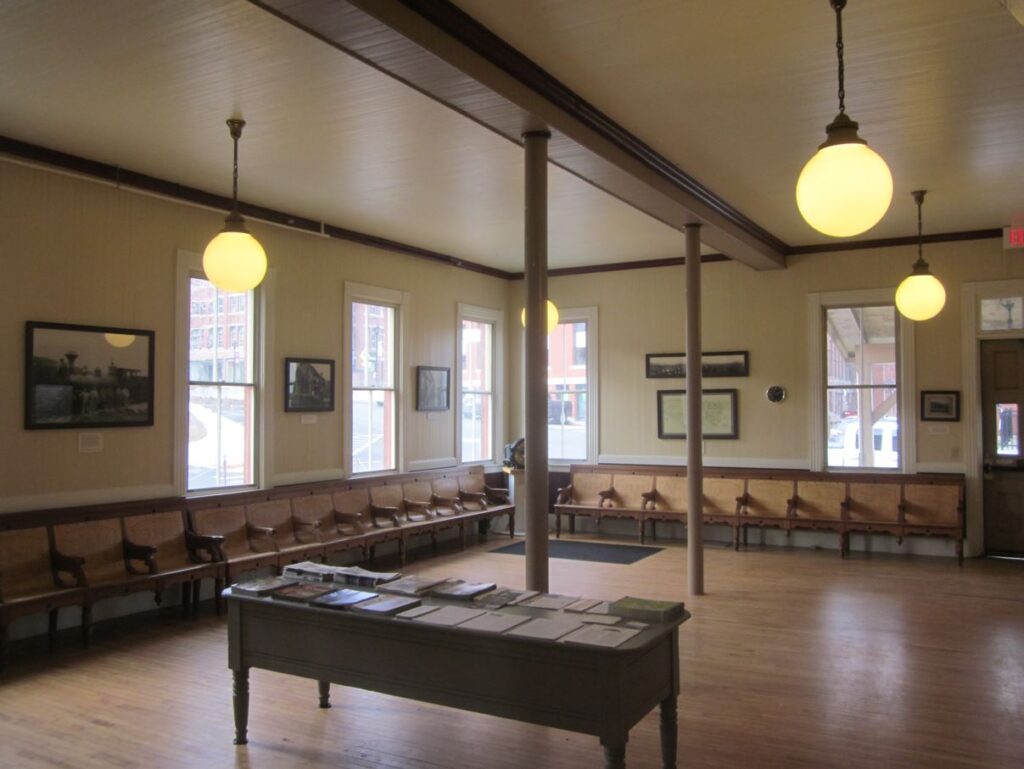
St. Johnsbury’s Perceived Problem
Let’s start with Start—Edwin A. Start to be precise. A Massachusetts native and the son of a Universalist minister, Start studied at Tufts and Harvard. He became a founding member of Tufts’ History Department. In the 1890s and early 1900s, his work appeared widely in academic and popular publications.
In 1890, prior to his academic career, and having lived in Vermont for several years, Start decided to make a study of St. Johnsbury. His article, published the following year in the New England Magazine, acknowledged the French-Canadian community. To quote fully:
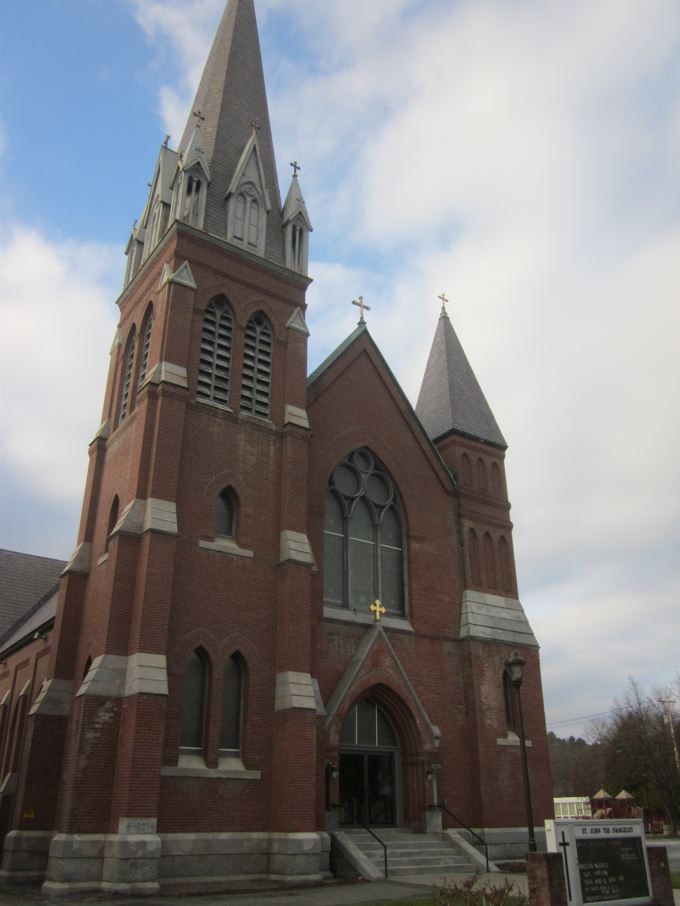
A few steps from Main Street, and near the new museum, stands the Catholic church, a stately stone edifice, with a tall and singularly graceful spire, holding far aloft its golden cross. This church is built of blue granite, somewhat lighter than the marble of the North Church. Near it is the brick convent and school of the Sisters of Notre Dame. On the hillside, descending from the church to Railroad Street, the cross streets are rapidly filling with a tenement-house population of French Canadians, who form the major part of the parish, and who are coming across the line in constantly increasing numbers, and who represent the foreign immigration problem so far as St. Johnsbury is concerned. They constitute about four-fifths of its foreign population, and are a difficult people to Americanize, being almost Chinese in their exclusiveness. They are Catholics, of a peculiarly narrow Old World type. They are not especially obnoxious neighbors; but their clannishness, the ignorance of the mass of them, and the patriarchal authority of their religious leaders, debar them from sympathy with the spirit of any American community, particularly of such a community as that of St. Johnsbury. Their children are educated in their parochial school, and the people live by themselves. There are exceptions. There are bright, progressive French-Canadians—quick, vivacious and intelligent, who take good positions in the community; but the mass of this people certainly present a problem.
To anyone remotely acquainted with Franco-American history, Start’s words will offer no great shock or surprise. This kind of public commentary appeared regularly in the 1880s and 1890s.
The purpose of this excerpt is not to offer a point-by-point rebuttal. That energy is better directed against the xenophobia that endures in our own day. The framing of Start’s article does, however, deserve attention.
In his first few paragraphs, Start provided urban readers with a reality check. Rural and small-town New England was not, as some believed, the relic of a bygone era. It was “not so exclusively historical,” though its historical features were certainly part of its charm. Start’s lexicon reflected the spirit that he found in St. Johnsbury: modern, liberal, beneficent, progressive, prosperous, intelligent, etc. The author was, in essence, redeeming northern New England and bestowing belated lettres de noblesse culturally, economically, and otherwise.
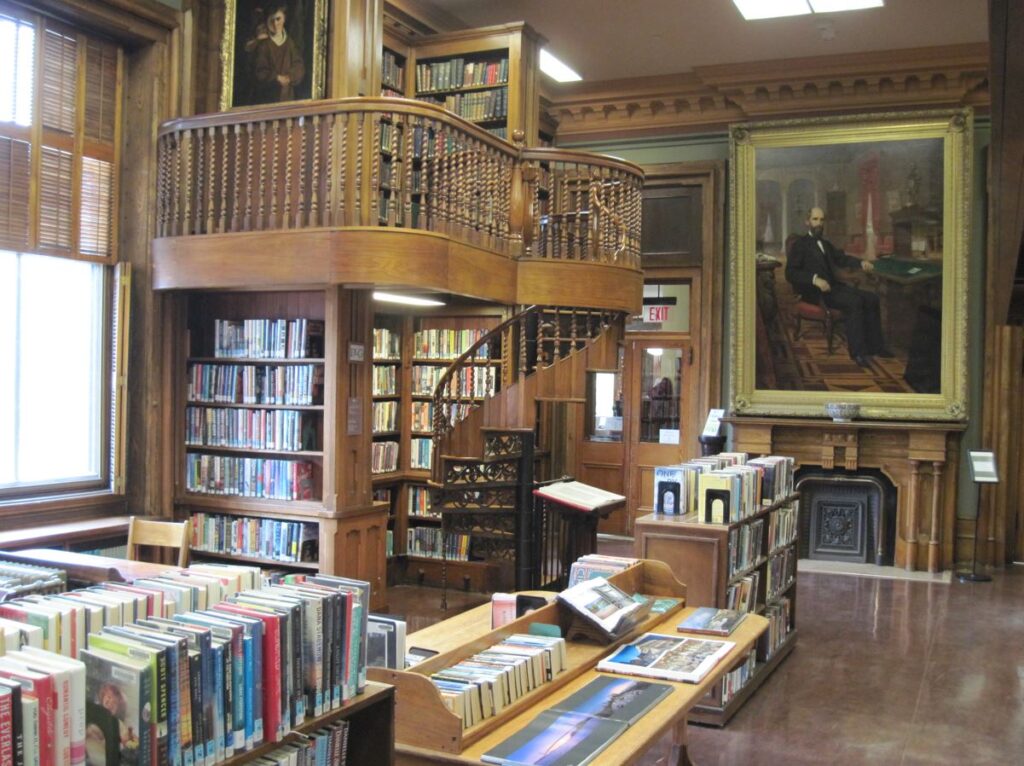
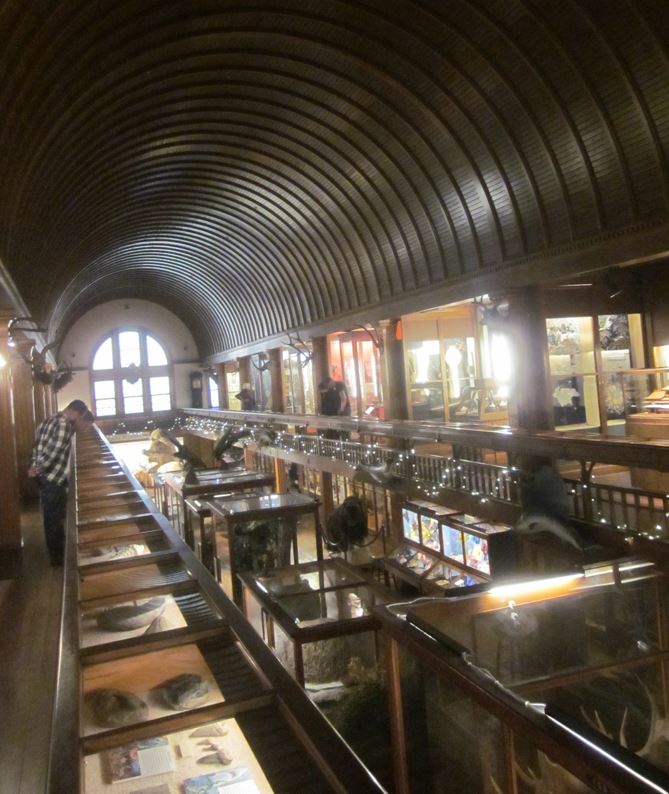
Start believed that St. Johnsbury was quickly becoming a model town. Certainly, it would have seemed so when glanced from the Athenaeum, the museum, the magnificent North Church, and the estates of the wealthy Fairbanks family. More modestly, in his conclusion, Start recognized that “St. Johnsbury is far from perfect,” and one cannot help but think that he was referring to the “foreign immigration problem.”
The Old World in America
Historians who have studied other communities have echoed Start and other late nineteenth-century chroniclers. They have depicted mutually unintelligible worlds (French v. English) with both xenophobia and survivance serving to reinforce the wall of separation between the two groups. There are two problems with this.
First, though we should not discount xenophobia, neither should we confuse the declarations of Anglo-Saxon mythmakers from Boston or New York City with the lived experiences of ordinary Franco-Americans. Mark Richard’s latest book, a Franco-American history of Plattsburgh, New York, offers ways of thinking through the issue of interethnic relations outside of industrial cities. If there are to be two archetypes, St. Johnsbury would be much closer to Plattsburgh than, for instance, Lowell, Massachusetts.[1]
The second issue relates closely to the ethnic divide. Start made it clear that, in his view, St. Johnsbury was progressing in spite of the French-Canadian presence in its midst. The town was modern in spite of the clannish, Old-World immigrants. Only exceptional Canadians supported the town’s progressive vision of itself. Start may even have implied that the future of New England rested with small towns rather than with large, industrial cities that attracted equally large immigrant populations. Progress could take place in St. Johnsbury because its fate still lay in the hands of bright, forward-looking Anglo-Saxons.
Start seemed oblivious to the paradox. It was foreign immigration that modernized rural and small-town New England and enabled the region to shed its “exclusively historical” appearance. Despite the promise of new railway lines, much of Vermont was facing economic decline in the second half of the nineteenth century. The wool trade went from boom to bust. Farms on marginal lands failed. The Anglo-Saxon population dropped as more and more families went west. The railway seemed to draw commerce and people away from the state. Immigration provided rural Vermont with farm hands and the communities of Burlington and Winooski with mill hands. The state’s aggregate population stabilized. French-Canadian men and women worked and built and spent and contributed to their adoptive communities in untold ways.
We are still missing a significant part of the story of modernization if we only take notice of the raw economic impact of immigrants. The arrival of the Irish and French Canadians destabilized the constructed world of Anglo-Saxon New England. Until then, the latter group could live within values and customs known to their ancestors a century earlier. Established (state-supported) churches survived into the nineteenth century in New Hampshire, Connecticut, and Massachusetts. In fact, Catholics were ineligible for election to the New Hampshire House of Representatives until 1877. The challenge of pluralism presented by people speaking “foreign” languages and practicing Catholicism was quite different from the family quarrel of Protestant dissent. It raised big questions about cultural integration, diversity and civic life, and the resilience of American institutions. French Canadians did not disrupt an American way of life in any meaningful sense. They did, however, disturb the mental world of those who had preceded them in the Northeast. Start’s article is evidence of that.
On paper, modernization would mean pulling unreconstructed Canadians into the current century through the demands of the workplace and the standards of the public school. As it played out, modernization actually involved the loosening of xenophobia and a strict survivance; it involved the creation of a world where civic life went on amid cultural differences. In many areas of the Northeast, French Canadians forced the descendants of Pilgrims and Puritans to contemplate a different kind of Americanism. In the 1890s, St. Johnsbury was no longer “exclusively historical” because of its French fact—a French fact that was dragging the “bright, progressive” Anglo-Saxons into a new world.
Long-time residents of the town saw French Canadians pool their meager earnings to build a majestic church. They saw French Canadians form parochial and fraternal associations that cared for the poor. Naturalized citizens and their children went to the polls. They brought the railway, contributed to the town’s landscape, and patronized Yankee shops. Their schools produced literate and well-mannered children. It was easy to look down on Catholics and the poor—and so xenophobia endured. But, in St. Johnsbury as elsewhere, a promising middle ground emerged.
St. Johnsbury: The Next Generation
In 1925, a local newspaper, the Caledonian-Record, published a 21-paragraph article on the life and recent death of Frank Landry. St. Johnsbury’s Republican likewise offered readers a lengthy tribute.
As the name suggests, Landry was of French descent; he was the son of immigrants. His father had served in the U.S. Civil War. Frank had lost both of his parents at a young age and spent part of his childhood in Quebec. He returned to Vermont and established a successful drug store in St. Johnsbury. He married Marie Legendre in 1893. Marie was a pioneer in her own right: she was appointed deputy sheriff with another woman, Lora Verney, in 1921. At least six daughters and one son were born to the couple.
Frank Landry was not merely a successful druggist. An editorial marking his death stated that he had been
[o]ne of [the town’s] leading merchants and most public spirited citizens . . . Mr. Landry was a devout member of Notre Dame church and his church and home life were ideal and inspirations to all citizens . . . The passing of Mr. Landry leaves a vacant chair in the circle of men who were willing and anxious to do their full share at all times for all good causes that might bring benefit to St. Johnsbury and its citizens.
And so, as it turns out, in the 1920s, the model citizen of the “model New England town” was a French Canadian. Significantly, Landry was not a purely assimilated American-born resident willing to disappear into the Yankee world that had long dominated local affairs. To be sure, he belonged to the Elks and the Rotary Club; he served on the board of directors of the Citizens Savings Bank and he was a charter member of the St. Johnsbury Country Club. Yet, he was also a faithful parishioner of Notre-Dame-des-Victoires. He was an active member of his local St. Vincent de Paul and Union Saint-Jean-Baptiste (USJB) councils. He belonged to the Foresters. He was immersed in the cultural life of his French-Canadian community. An untitled letter published days after his death indicated that Landry was “[p]roud of his blood and his Gallic ancestry.”
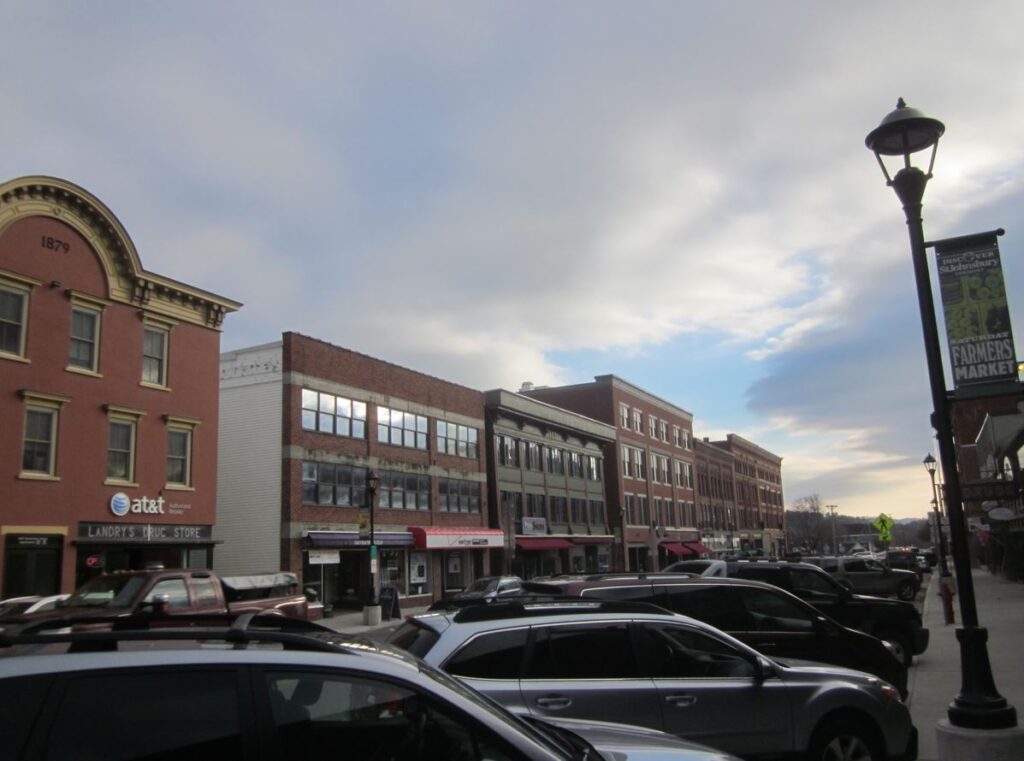
We might write off Landry as someone who was accepted in higher social and business circles in spite of his ethnic background—a token, or one of Start’s “bright, progressive” exceptions. But that doesn’t quite fit. We must appreciate the enormous leap in thinking needed to admit as an equal a member of a minority group, all the more so among the Yankees who had long enjoyed cultural hegemony in northern New England. This shift came with two implied concessions: first, French Canadians were capable and, second, other French Canadians would follow. We might call it equity and inclusion. We might also call it modernization, which would have been impossible without the “problem” of diversity presented by immigration from Quebec. Xenophobia did not disappear in the interwar period, but its tangible barriers began to crumble.[2] The Second World War and the Cold War would, in turn, also help erode outward expressions of intolerance afflicting the white population.[3]
Postscript
J. D. Bachand was Landry’s junior by a little over a decade. When he arrived in St. Johnsbury, Landry was already settled in business. But he was quickly drawn into the same cultural and civic circles. The two men were active members of their USJB council at the same time. When Governor Allen Fletcher visited the town in 1914, Landry was among the citizens selected to welcome him. Fletcher was then escorted to Bachand’s home for a meal. (The USJB would formally host Vermont’s lieutenant governor in 1923.) Bachand and Landry headed a committee of French Canadians dedicated to supporting the war effort in 1917. Bachand helped Landry recover his car when it was stolen. He also sang at the wedding of Landry’s son months before Frank’s passing.
Together, these men showed what French Canadians might achieve in St. Johnsbury. Just as they offered their time and labor to their community, Bachand and Landry’s lives and achievements were made possible by a modern St. Johnsbury.
Sources
Landry was eulogized in the August 10 and August 12, 1925, issues of the Caledonian-Record and the August 13, 1925, issue of the St. Johnsbury Republican. Biographical information on Start and Landry was drawn from Ancestry.com. On Bachand, Landry, and their community involvement, see the Caledonian-Record for April 8, 1914; April 25, 1917; February 2, 1921; January 19, May 25, and September 5, 1923; and May 28, 1925.
T. Seymour Bassett discusses the economic and cultural transformation of the Green Mountain State in The Growing Edge: Vermont Villages, 1840-1880 (1992). Additional information on the history of St. Johnsbury appears on the page of the local Catholic parish and the town’s Historic Register listing.
[1] The French-Canadian share of the population was lower in St. Johnsbury, however. Systematic sampling reveals that 26 percent of residents had two Canadian-born parents in 1900. French Canadians far outnumbered their English counterparts, such that about one out of every five St. Johnsburians was French-Canadian—1,400 people in all. Edouard Hamon had given a figure of 1,700 a decade earlier, but he likely included French Canadians from surrounding towns who attended church at Notre-Dame-des-Victoires in St. Johnsbury.
[2] Still, after the First World War, Bruno Wilson could write, “Disons enfin que l’entente la plus cordiale règne entre Franco-américains de Saint-Johnsbury et les autres éléments ethniques. Fidèles aux traditions ancestrales, nos compatriotes prouvent qu’ils peuvent, autant que les Yankees, les Irlandais, etc., se créer une situation heureuse, enviable, aux Etats-Unis!”
[3] Of course, as we know, racial barriers were far more entrenched. Franco-Americans participated in their perpetuation.
Great essay, Patrick. My grandfather’s cousin “Pit” (Joseph Ozias) Bourassa was born in St. Johnsbury.