Last year, this blog brought attention to new, innovative studies of Franco-American history. Well, in only the short time since, research has moved forward—good news for all of us who wish for a vigorous field that continues to mature and attract attention. The brief synopses presented in this post, which may not fully do justice to the authors’ research, will, I also hope, inspire folks to read, cite, and disseminate these studies.
Publications like Quebec Studies and academic journals based in Quebec regularly print articles on French-Canadian migrations and Franco-American life. By contrast, some of the studies listed below—a small sample of recent research on Franco-Americans—have appeared in less expected places. Four are articles published in journals without an ethnic or geographical vocation. One study is a book chapter and another was penned as a thesis at a Midwestern university.
There is still much to do to understand Franco-American life in its full complexity. The following help provide direction.
Leslie Choquette, “Une famille migrante se raconte: les Jobin de Québec et de Boston aux XIXe et XXe siècles,” De l’oral à l’écrit, de l’objet à l’image: Expressions de la reconnaissance dans les francophonies nord-américaines (2024)
This article expands on Professor Choquette’s introductory work on the Jobin family, which appeared in the International Journal of Canadian Studies in 2011. In 1890, following a bout of ill health, small business owner Joseph Jobin moved his large family from Quebec City to Boston. There, Joseph’s story ended prematurely: he died at the age of 49. The study is more concerned with the experiences of the next generation. Economically, the family was as a whole spared industrial work. Undoubtedly thanks to the capital that Joseph had accrued in Canada, the Jobins were able to maintain themselves in middle-class occupations (and respectability) and likewise with the third generation. In this sense, the article invites us to pay closer attention to the Franco-American middle class.
Choquette also studies the different life paths of the Jobin children from a cultural standpoint. One embraced mainstream, anglophone American culture and another served as president of a Union Saint-Jean-Baptiste council; most fell on a spectrum between these two. This is a valuable word of caution against cultural determinism. Members of a single family could make different choices according to their life circumstances, interests, and tastes.
The Jobin family collection, which includes an overarching history by Marie-Eugénie Jobin, is housed at Assumption University’s Institut français.
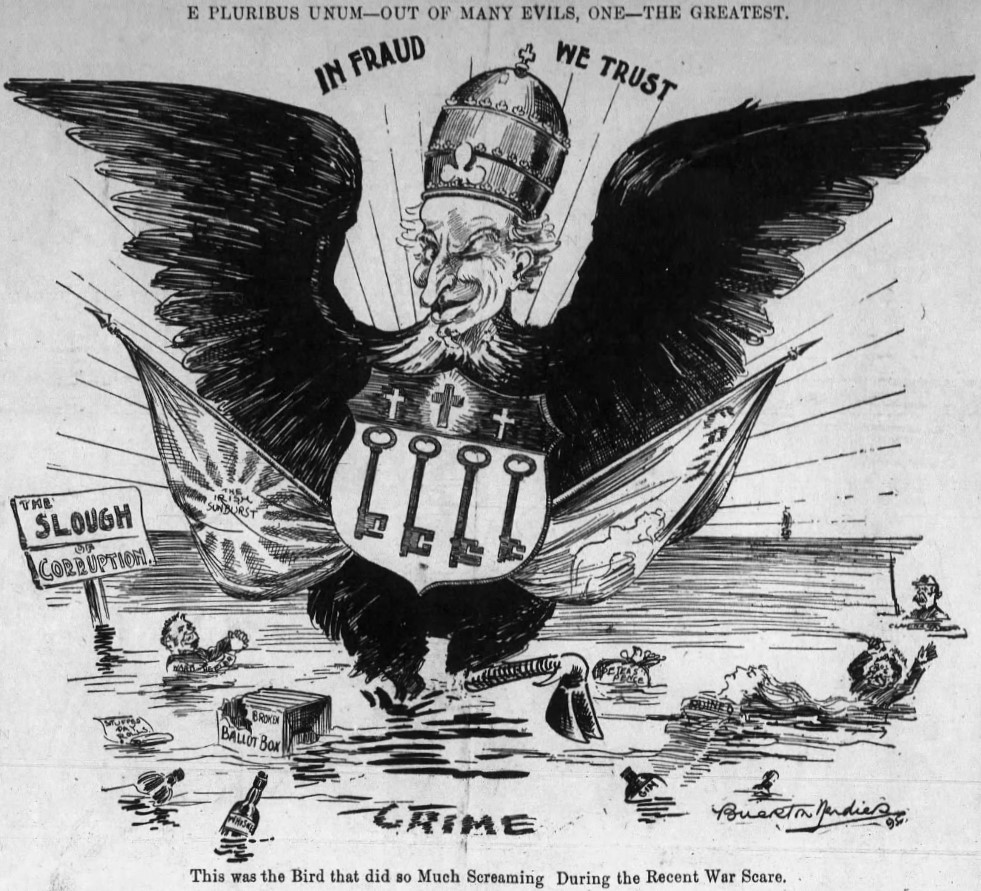
Brendan A. Shanahan, “The Late Nineteenth-Century North American Catholic Schools Question: Tangled Disputes over Catholic Public Education in Manitoba and Minnesota,” Catholic Historical Review (2024)
Beyond the Riel controversy, casual readers of history could easily miss the profound transformation of the Canadian West in the last two decades of the nineteenth century. As the author argues here, it has also been all too easy to miss, even among academic historians, the extent to which “national” debates crossed borders.
The Manitoba Schools Question marked a cultural turning point on the Prairies. The influx of English-speaking and Protestant settlers led Manitoba’s provincial government to replace a denominational education system with universal public schools. The vigorous debate that ensued caught the attention of the American press, which quickly made the connection to John Ireland’s educational plan. Ireland, the archbishop of St. Paul, Minnesota, proposed public schooling that would be offered out of Church-owned buildings such as to enable clergy to provide religious instruction before and after school hours. This would also mean revenue from public funds. This was the so-called Faribault Plan, named for one of the locations of Ireland’s pilot program.
Like the near-simultaneous Cahensly Affair, the Manitoba Schools Question and the Faribault Plan aroused the predictable passions of Catholics and Protestants. Shanahan explores the ways in which those debates merged in the public mind, momentarily erasing the national boundary. Franco-Americans were attentive to these debates and the article shows how the education issue echoed in their ethnic press.
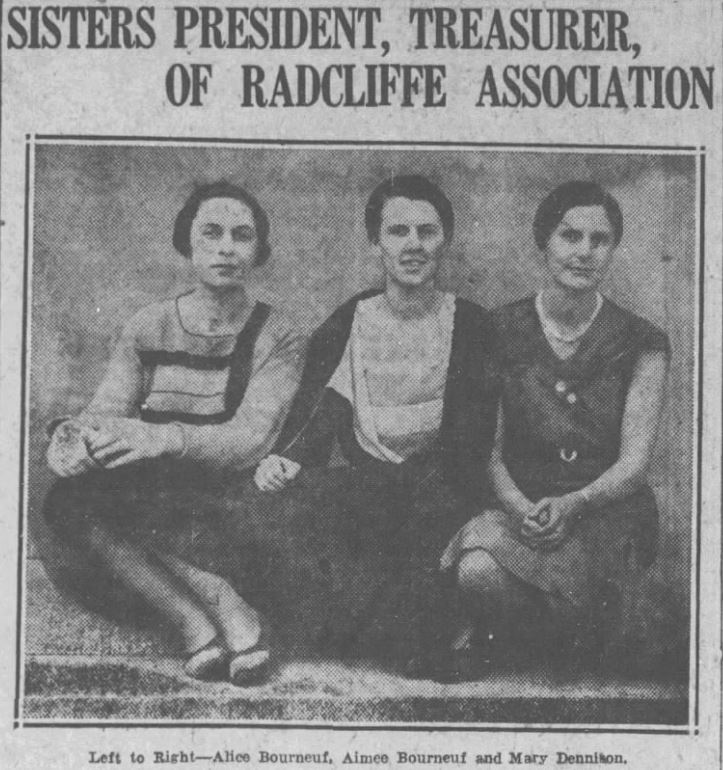
Colby Gaudet, “Agnes, Aimée, Alice: Three Acadian Sisters as Exemplary Twentieth-Century American Catholic Women,” U.S. Catholic Historian (2025)
This year, I noted that “studies of Acadian migration flows between the Maritimes and New England . . . have been few and far between.” Phyllis LeBlanc and Carmen d’Entremont are changing this. So is Colby Gaudet. In this piece, Gaudet traces the influential, fascinating, and sometimes unusual lives of the Bourneuf sisters. Their Acadian parents had moved from southwestern Nova Scotia to Haverhill, Massachusetts, in the late nineteenth century. The family prospered.
Through the life journeys of three sisters, Agnès, Aimée, and Alice, this study offers an intricate glimpse of the intersection of ethnic identity, faith, gender, and class. It also takes the story into the postwar period. Agnès became a writer and performed clerical work before opening a bookstore in Cambridge, Massachusetts. Aimée joined the Society of the Sacred Heart (Soeurs du Sacré-Coeur) and taught at a Catholic institution in Harlem. Alice became an economist; she traveled widely, worked for the federal government, and taught at various institutions, including Boston College.
All three sisters drew from the faith of their Acadian ancestors and the resources of the family’s adoptive home to become female Catholic leaders and intellectuals, touching countless lives in Massachusetts, New York, and beyond.
Jessica R. Pliley, “Alienated Outcasts: Nullified Motherhood, Uncertain Citizenship and Family Separation at the US–Canadian Borderlands in the 1930s,” Gender & History (2025).
Deportation is back in the news and Pliley provides valuable context. Her article addresses INS proceedings undertaken against Canadian women on grounds of immorality in the interwar period. The three case studies feature women who had acquired Canadian citizenship through a father or a husband, highlighting a gendered disparity in how one might claim status. In the case of Merla Holliday, who admitted to engaging in sex work in the United States, both INS officials and the defense navigated a tangled web of immigration statutes that provided little clarity. As with Holliday, the INS was typically successful; often, it severed these women’s only family ties.
Marie Laliberté’s experience is sad but telling. Originally from Manchester, she traveled to Detroit with a friend who, there, earned money from prostitution. Because Marie shared a hotel room paid by this friend, she was deemed to have benefited from the proceeds of sex work—a crime and an offense that provided grounds for deportation. She was deported and thus separated from her only child. She reentered the United States illegally only to be deported again at the end of the 1930s. Pliley’s work hints at a (largely) untapped documentary record but also at an analytical framework that sheds light on the tenuousness of citizenship for women.
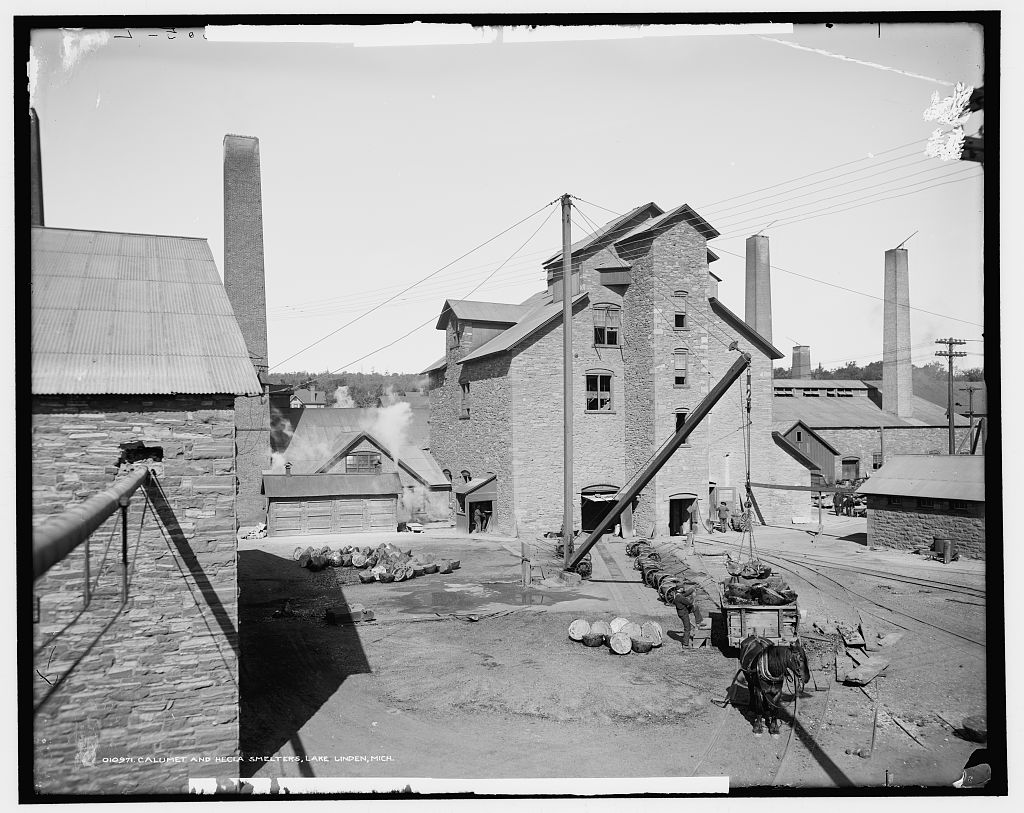
Brooke S. Schwaderer, “From Conscientious French Canadian to Enterprising American: Making Memory and Measuring Social Mobility of French Canadians 1880-1940,” Michigan Technological University (2025)
The experiences of Franco-Americans in the Northeast were different from those of their cousins in the Upper Midwest. The field of research tends to reflect this fracture. But scholars need to avoid silos and can afford to learn from the other region. Schwaderer’s master’s thesis sheds light on Michigan’s Keweenaw region—expanding on Jean Lamarre’s work—but may also provide inspiration to folks who work on New England and New York (as she draws inspiration from Maine).
This study connects “objective” measures of social mobility with the memory of family experiences gathered in oral interviews. Schwaderer ultimately finds that the Keweenaw French enjoyed positive mobility over the course of several generations, attaining more skilled or managerial positions than members of other ethnic groups. As the lumber industry declined, many workers turned to agriculture and purchased land. Others, buoyed by the patronage of fellow Canadians, owned businesses. The case of David Giroux, set in contrast to two other contemporary migrants, brings color to the author’s findings. Giroux first worked in mining, after which he ran a bicycle repair shop, which enabled him to own a home—valued at $950 in 1930—in Laurium. That many Franco-Michiganders succeeded without necessarily relinquishing their ancestral culture adds valuable nuance to the regional story.
Barbara M. Tucker, “‘Grinding Its Help’: Baltic Mills, Sprague, Connecticut,” Journal of History (2025)
This is the second article on Franco-Americans to appear in the Journal of History in a year, showing what might be done to bring this area of history to other researchers’ attention. That the author approaches the topic from a different angle is made plain in the footnotes. The only secondary source specifically on Franco-Americans appears to be a book published by Gerard J. Brault nearly forty years ago. Tucker places the story of Connecticut textiles in the literature on labor and industrialization instead, an approach that has the virtue of decloistering the field.
Much of late nineteenth-century industrial work was unenviable, at least from a present-day perspective: child labor, endemic poverty, cramped living conditions, contaminated water supplies, disease—the list goes on. Well, it was worse in Connecticut. The mills of Sprague, Connecticut, 15 miles from Rhode Island, relied heavily on French-Canadian workers who experienced a constant “grind.” Tucker paints a vivid picture, one that is reminiscent of the Massachusetts Bureau of Labor Statistics’ depiction of Fall River in the 1880s. That picture helps explain why, at least by reputation, Connecticut mills were deemed the worst for workers.
Pingback: This week's crème de la crème - October 25, 2025 - Genealogy à la carteGenealogy à la carte
Bonjour M. Lacroix. J’aimerais bien recevoir vos courriels/recherches sur l’histoire franco-américaine, en particulier si vous publiez des renseignements sur les JOLIN qui ont quitté le Canada et se sont établis aux États-Unis. Je travaille sur la descendance de Jean Jolin, premier Jolin arrivé en Nouvelle-France.
Je suis bilingue alors aucun problème. Peut-être vous pouvez m’indiquer votre site web pour que je vérifie d’autres articles que vous avez publiés.
Merci beaucoup.
Pierrette Jolin – en Ontario depuis 1967 mais autrefois de l’Ancienne-Lorette
Merci Pierrette. Je n’ai pas d’infolettre. Mon site, querythepast.com/franco-americans/, offre un aperçu de mes recherches. Il contient plus de 200 billets touchant surtout à l’histoire franco-américaine. Mes publications savantes sont indexées sur mon profil Academia.edu. Si certaines publications sont inaccessibles compte tenu des restrictions des éditeurs, n’hésitez pas à me rejoindre et je vous enverrai les articles par courriel. Pour le moment, je n’ai rien sur les Jolin.
Thought-provoking. As always, your posts open my mind to different perspectives on the culture.
Looking at what people are studying leaves me with a “limbo” feeling, similar to the one when I first visited the Museum of Work and Culture in Woonsocket Ri: lived experience as the subject of history or preservation. I know these are about the generation before mine, but they have the flavor of “news” rather than “history” to me.
Going to look at that Michigan thesis if I can find it. My Uncle Emil left Massachusetts for Detroit, and my Aunt Dot for Chicago. That seemed like a “modern” version of the ancestors/relatives who spread out from New France, some to return, some to set up elsewhere — wet nursing when Detroit was founded by Europeans, fur traders, joining up with Joseph Smith’s group to Utah.
Which leads me down the ol’ rabbit hole of wondering about the leaps and bounds of history.
Absolutely!
Here is B. Schwaderer’s thesis: https://digitalcommons.mtu.edu/etdr/1905/